About Belmond Public Library
Belmond's library history began in 1879 with a public reading room located above Pritchard's store. In the late 1890s, the Women's Christian Temperance Union maintained a small book exchange in the Davis home.
Shortly after 1910, a group of civic-minded residents began exploring the idea of establishing a public library. Their efforts led to the formation of Belmond's first Library Board in 1915.
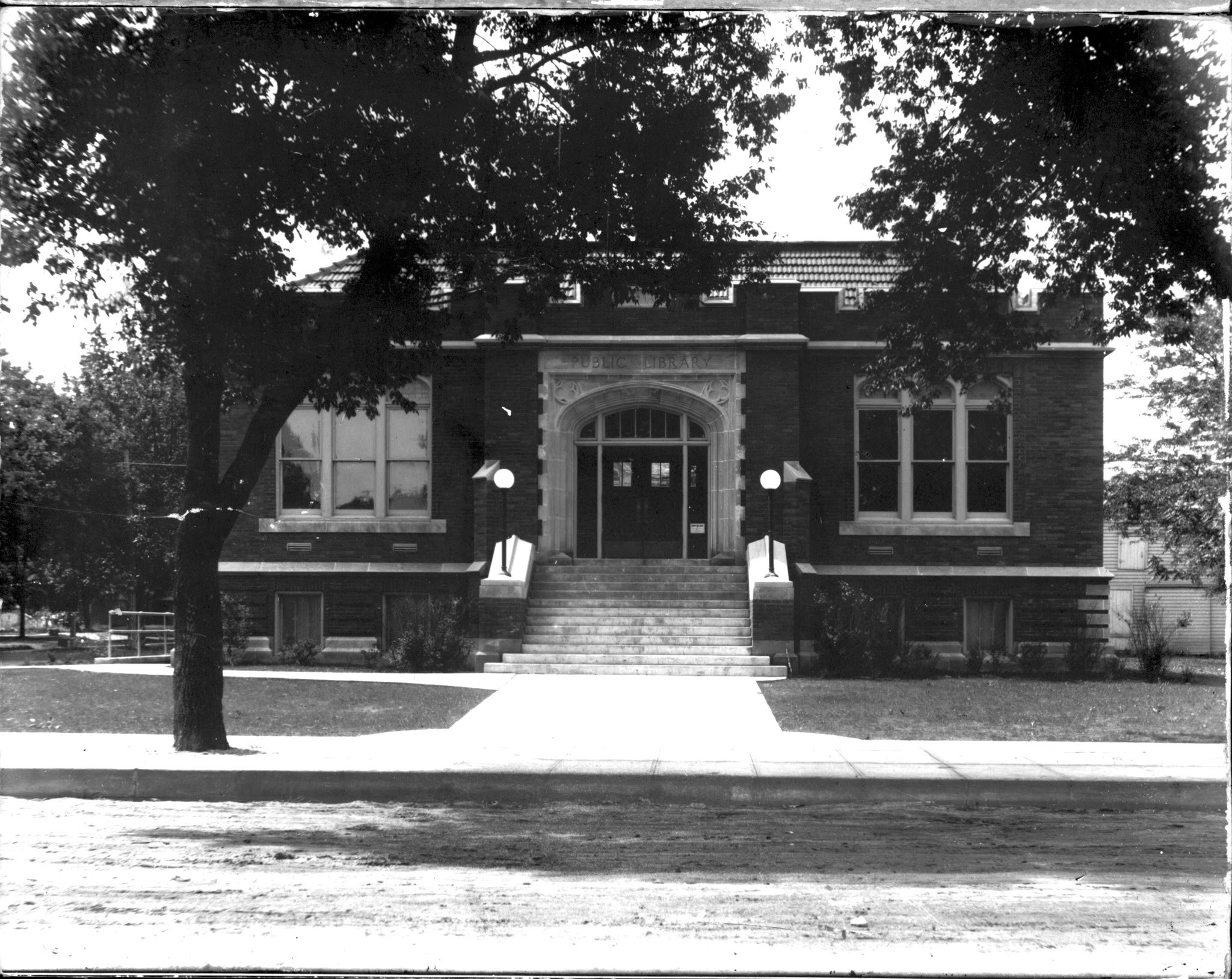
That same year, Henry Crist, a local farmer who moved to Belmond in 1877, donated the land for a library building. Mr. Christ donation was a memorial to his love for Belmond and devotion to his mother. After deciding against funding from the Carnegie Foundation due to its requirements, Mr. Crist personally paid the $15,000 cost of construction. Belmond residents raised additional funds for furniture, equipment, and books.
Belmond's first free public library opened in 1917 and dedicated on May 23 of that year. Anna Case served as the library's first librarian. Her successors include Mrs. J.E. Wallace, Mrs. H.E. Colby, Mrs. Richard Woodin, Dorothy Gram, Carol Bailey, Chris Adcock, and Sonya Trager.
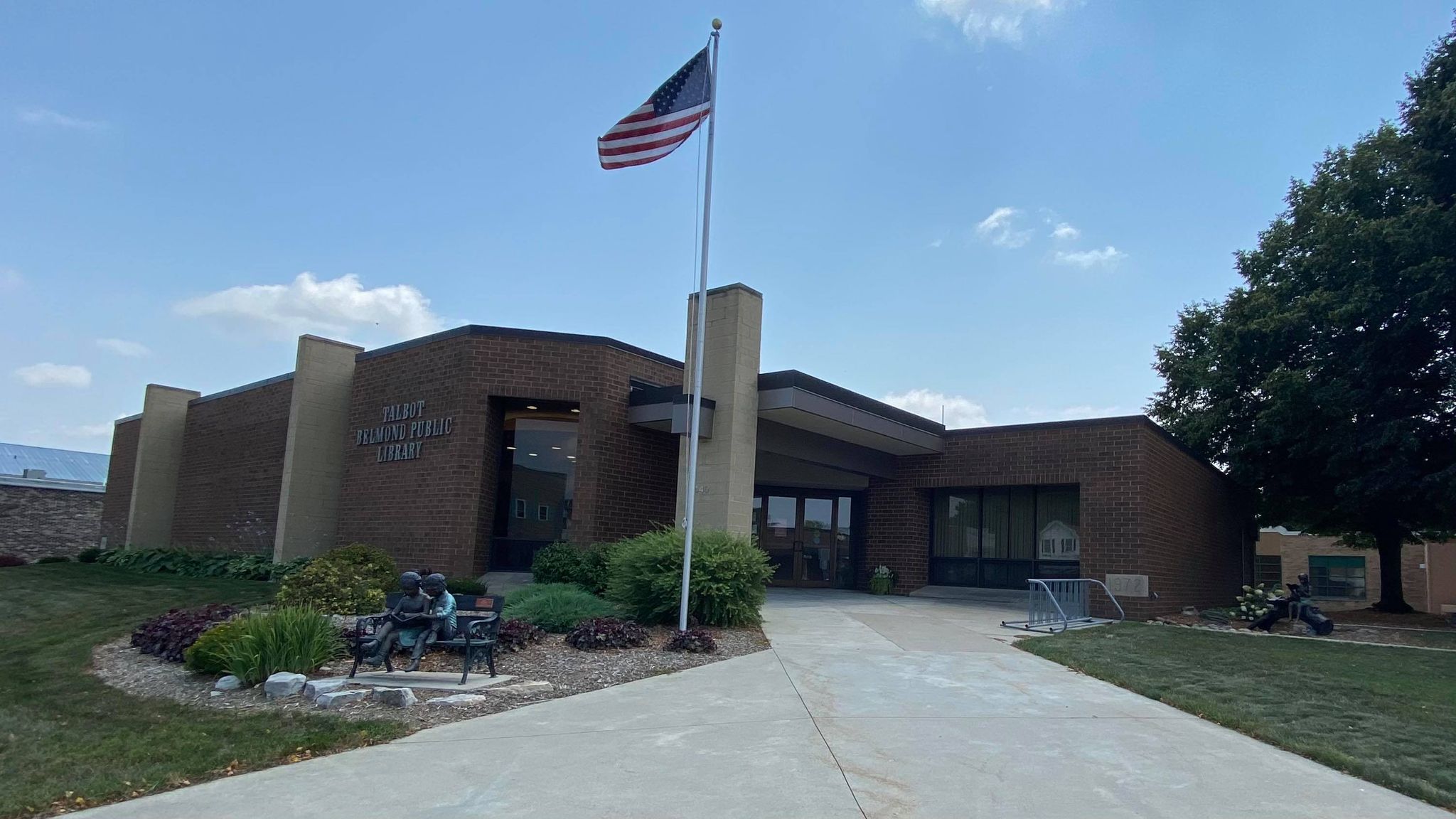
The original building was structurally weakened by the 1966 tornado, and in 1970, the Library Board of Trustees decided to build a new facility. A $50,000 bond issue for the new library was approved, and generous donations from Belmond residents, along with federal grants, helped cover the remaining costs.
In 2002, a group of dedicated library supporters launched a fundraising campaign to remodel and expand the 1972 building. Nearly $1 million was raised. The project increased the size of the main library by 40 percent and added a small conference room, staff offices, and an enclosed children's area. The entire facility was also renovated with new flooring, lighting, furniture, and décor.
The building was named in honor of contributors Lora and Russ Talbot and was rededicated in June 2003.
The library has continued to grow and evolve, adding new technology, expanding its collection, and meeting the changing needs of the community. While libraries still provide access to books and other materials, they have also become community gathering places and important centers of local culture and connection.